Rhode Island Blue Sharks Dive Sites Map
1 dive site, 29 photos
Click the map to enable scroll-wheel zoom. Switch on “Water depth shading” and click anywhere for the approximate depth, “Seafloor relief” for sonar-surveyed areas, or “Nautical marks” (zoom in) for harbours, wrecks, buoys and lights. Depth data (GEBCO grid of roughly 450 m; GMRT only where ships have surveyed) and nautical marks (OpenSeaMap) are for orientation only, not for navigation or dive planning. Pin positions mark the start of the dive (boat anchor or entry point), not the exact spot underwater. Zoom out to see dive sites of other locations: grey pins are dive sites without photos, flags are dive centers. Pale pins show an approximate position (nearby dive center or dive area).
Diving with Blue Sharks
For many years, one of the best opportunities to encounter blue sharks in the wild was through Pelagic Expeditions, a small Rhode Island-based operator founded by renowned underwater photographer Joe Romeiro. Unfortunately, the company appears to have ceased operations as of 2026.
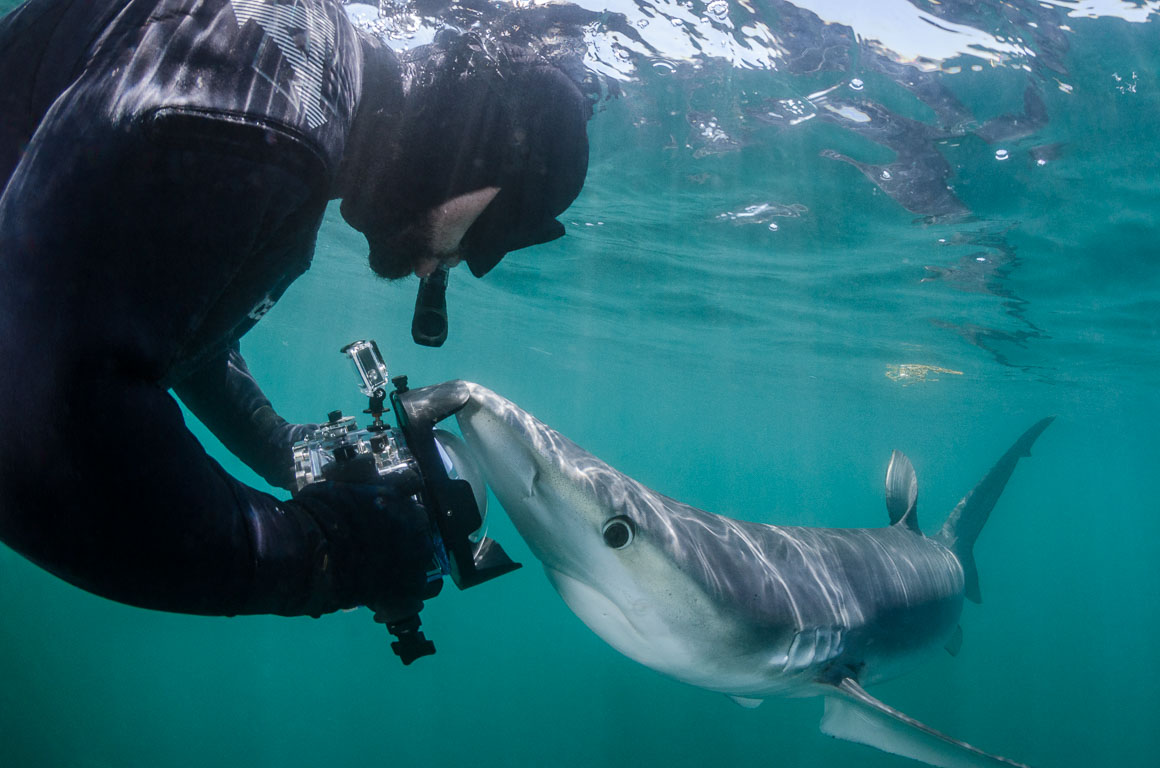
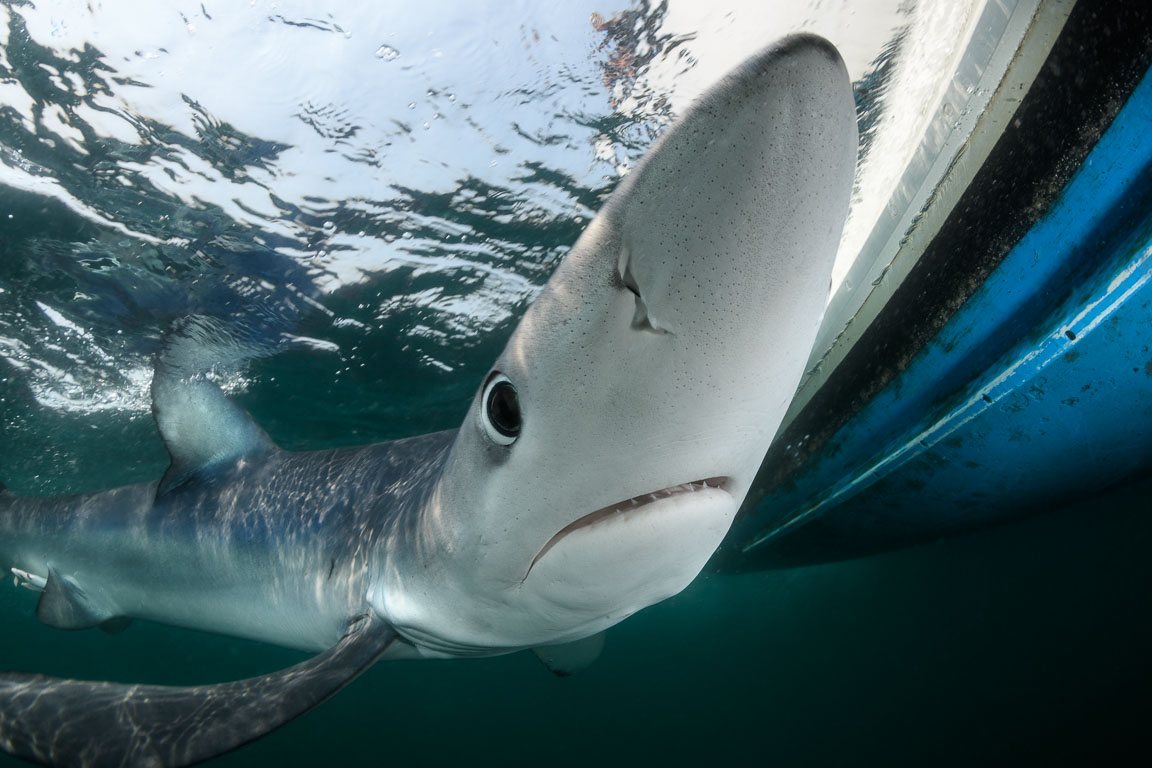
The excursions were full-day trips into the offshore waters of Rhode Island. Once the vessel reached an area where blue sharks were known to occur, it would drift with the current while a chum slick was deployed to attract the animals. Patience was often required—sometimes more than an hour would pass before the first shark appeared. However, once the sharks became accustomed to the boat, they frequently remained in the area and approached remarkably close. With a maximum of five snorkelers and one guide in the water at any given time, participants had ample opportunity to observe and photograph these magnificent predators at close range.
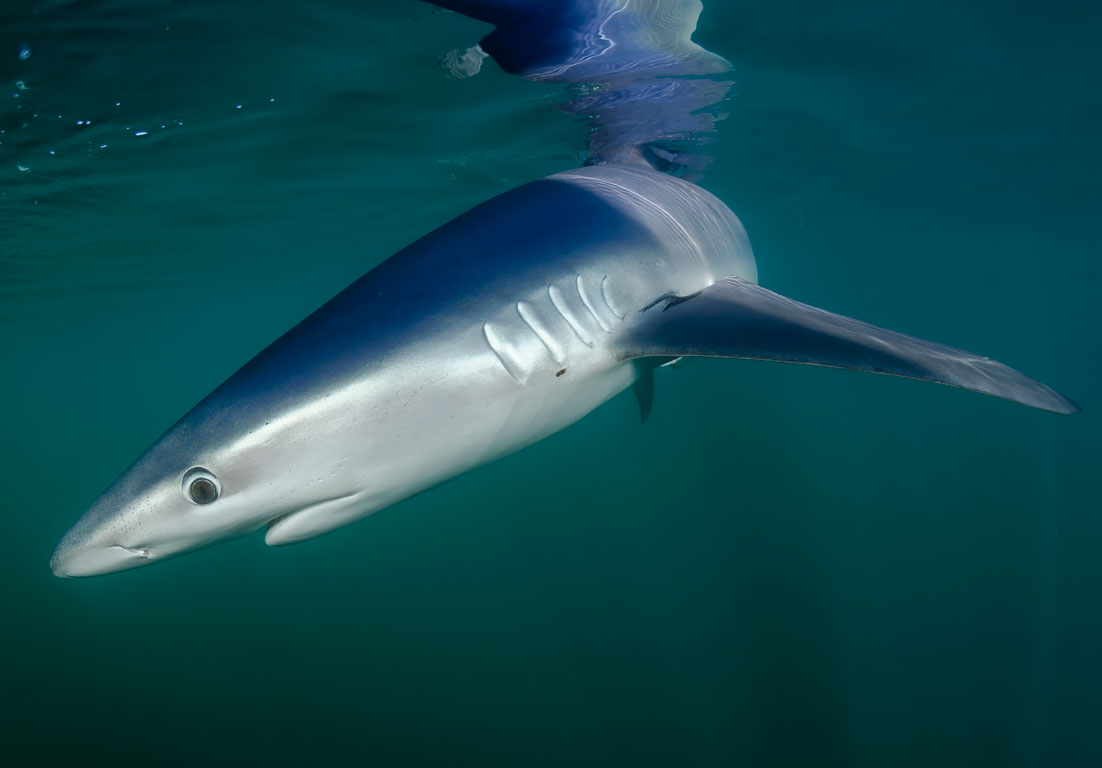
Blue sharks (Prionace glauca) are among the ocean’s most graceful and elegant sharks. Their slender, streamlined bodies are built for life in the open sea, and their coloration is striking. The upper body ranges from pale blue-gray to deep indigo, while the underside is bright white, creating a beautiful contrast that serves as camouflage in the pelagic environment.
Despite their beauty and ecological importance, blue sharks face intense pressure from both commercial and recreational fisheries. It is not uncommon to encounter individuals bearing the scars of human interaction, including large fishing hooks embedded in their jaws. Blue sharks are caught both as targeted catch and as bycatch in pelagic longline fisheries, with their fins, meat, and other products entering international markets. An estimated 10 to 20 million blue sharks are killed each year, making them one of the most heavily exploited shark species in the world. As a result of decades of fishing pressure, population declines of more than 90% have been reported in parts of their range, highlighting the need for continued monitoring and conservation efforts.