 Red
 Red
 Red
 Red
 Red
 Red
 Red
Wolf Rock 2016 Dive Sites Map
2 dive sites, 15 photos
Click the map to enable scroll-wheel zoom. Switch on “Water depth shading” and click anywhere for the approximate depth, “Seafloor relief” for sonar-surveyed areas, or “Nautical marks” (zoom in) for harbours, wrecks, buoys and lights. Depth data (GEBCO grid of roughly 450 m; GMRT only where ships have surveyed) and nautical marks (OpenSeaMap) are for orientation only, not for navigation or dive planning. Pin positions mark the start of the dive (boat anchor or entry point), not the exact spot underwater. Zoom out to see dive sites of other locations: grey pins are dive sites without photos, flags are dive centers. Pale pins show an approximate position (nearby dive center or dive area).
Diving Wolf Rock
Wolf Rock is a group of small volcanic pinnacles rising from the sandy seabed to within a few metres of the surface. The site lies offshore from Rainbow Beach, a small holiday town on the Queensland coast, close to K'gari (formerly Fraser Island). The surrounding seabed is almost entirely sand. K'gari itself is the world's largest sand island, and this makes Wolf Rock an isolated rocky outcrop in an otherwise sandy environment.
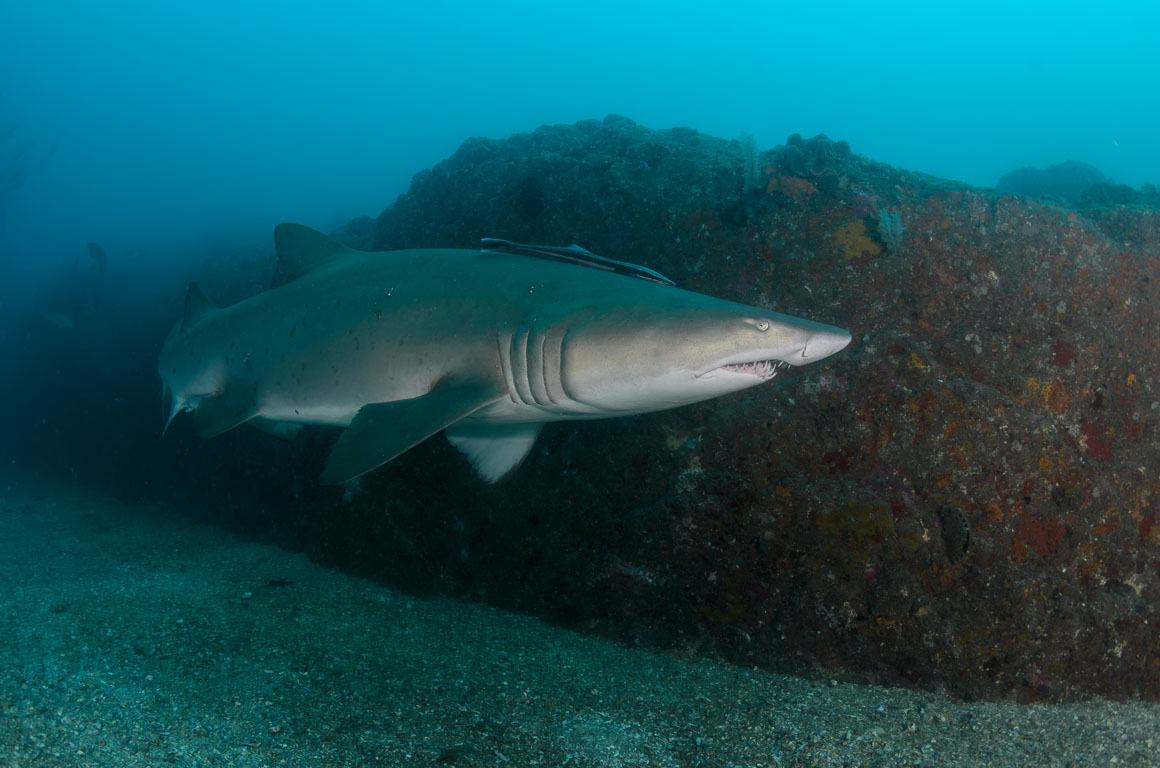
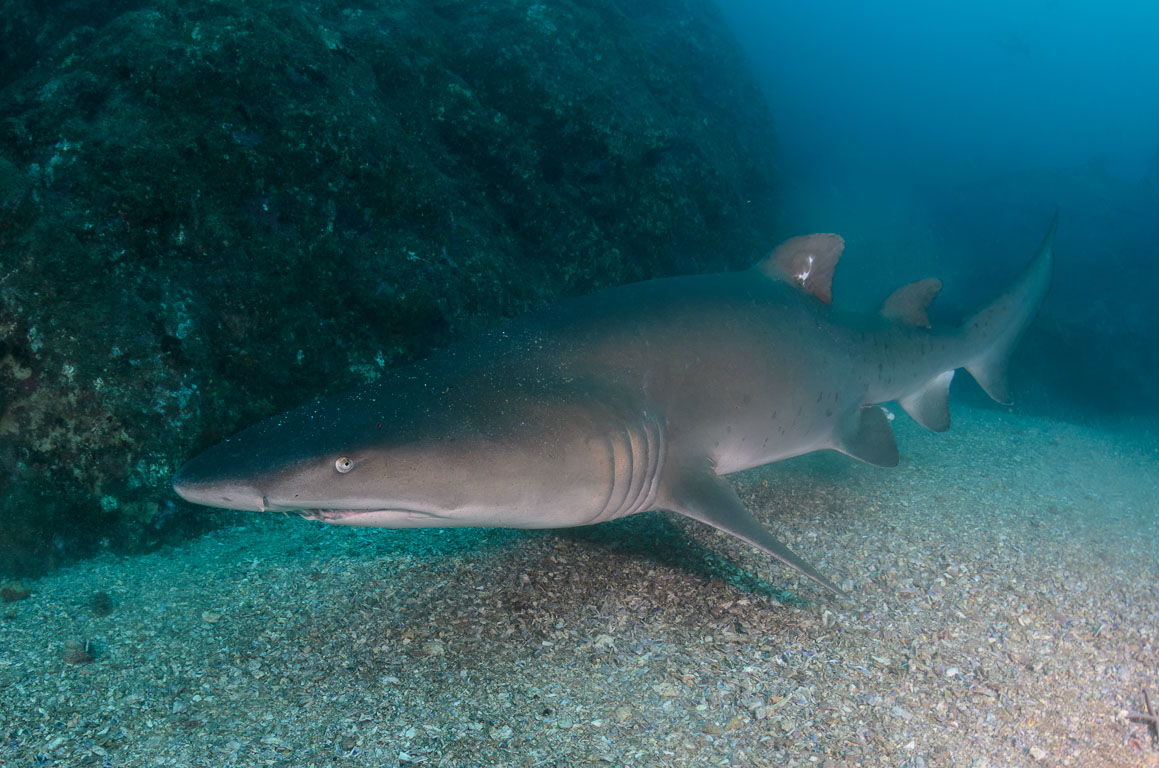
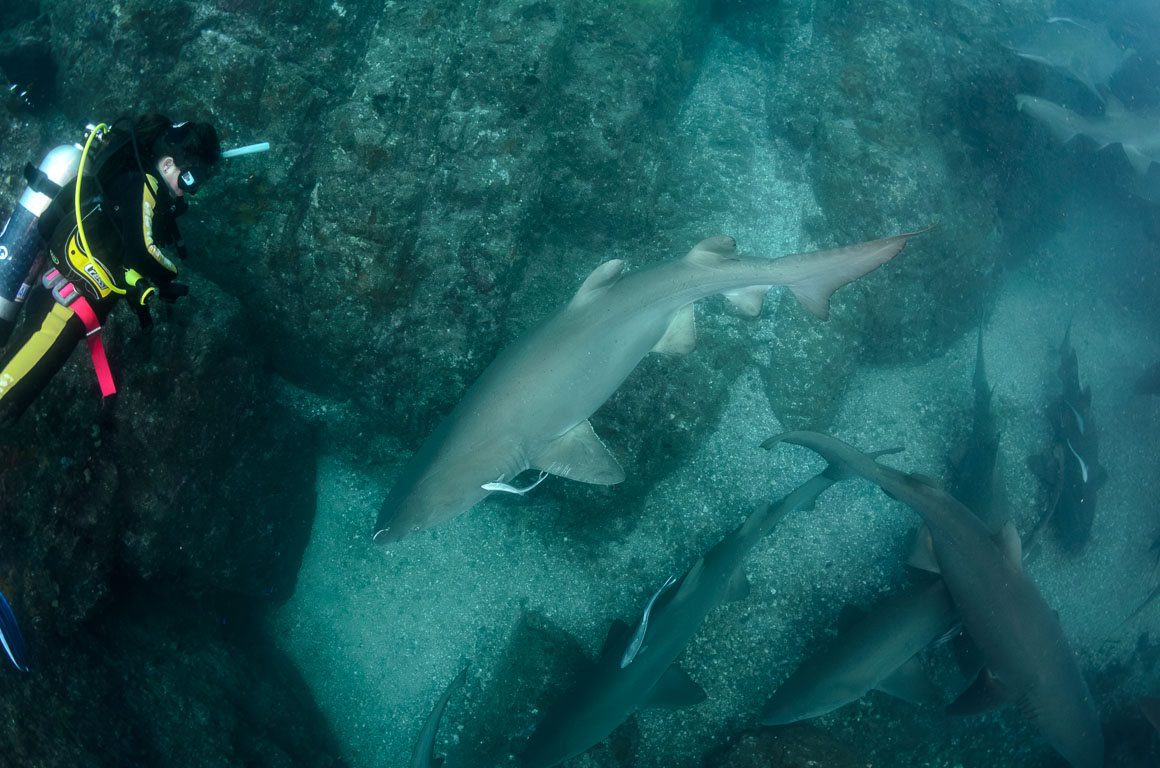
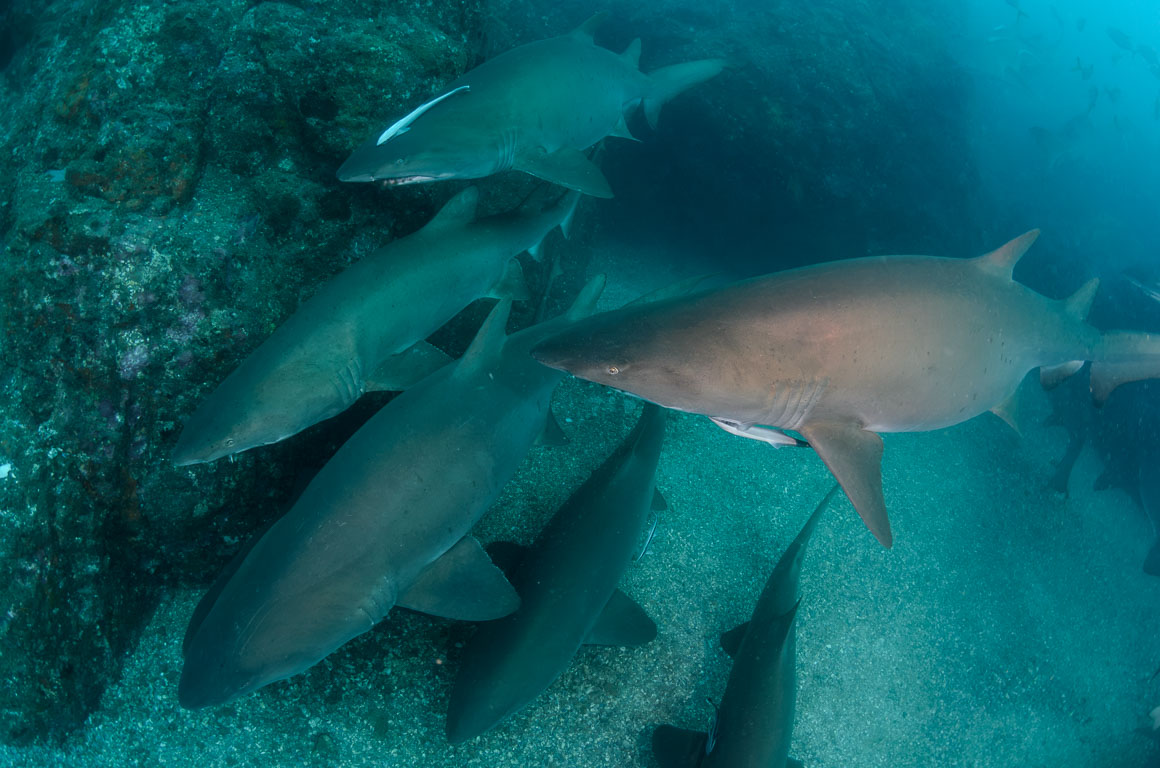
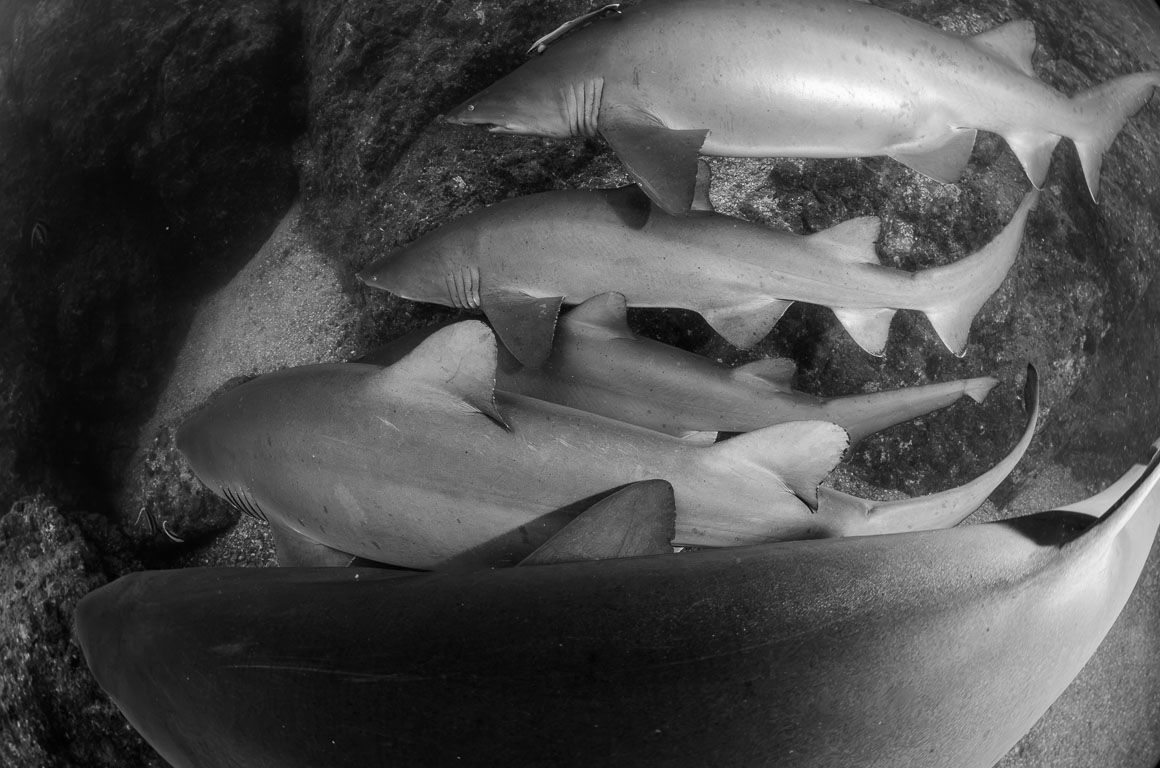
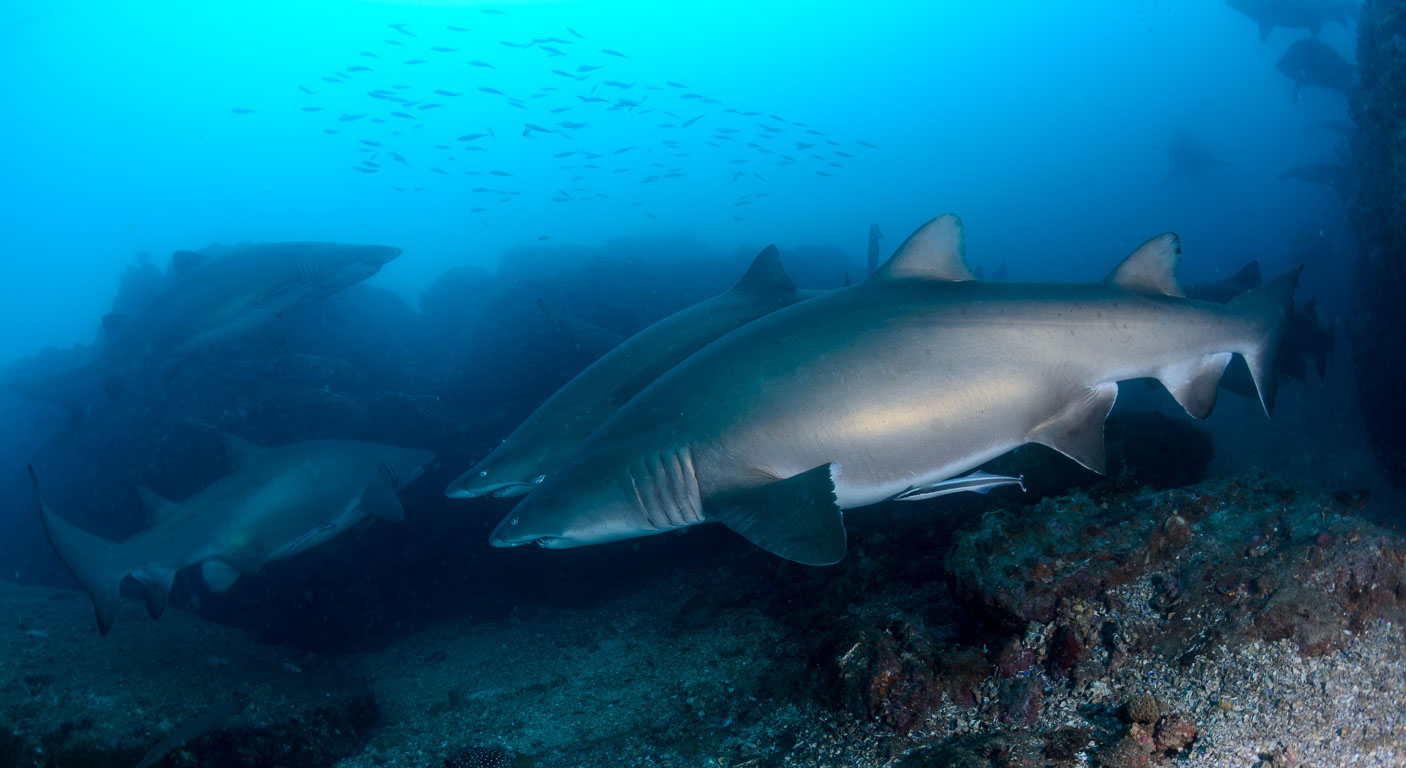
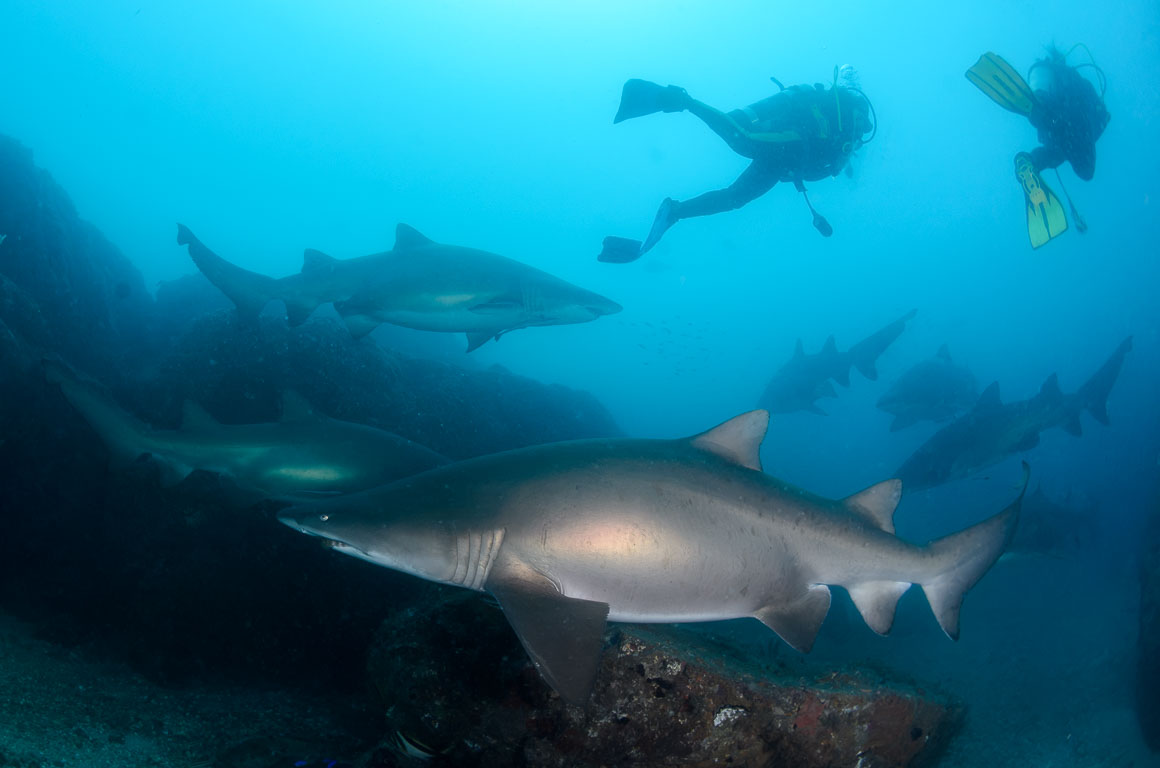
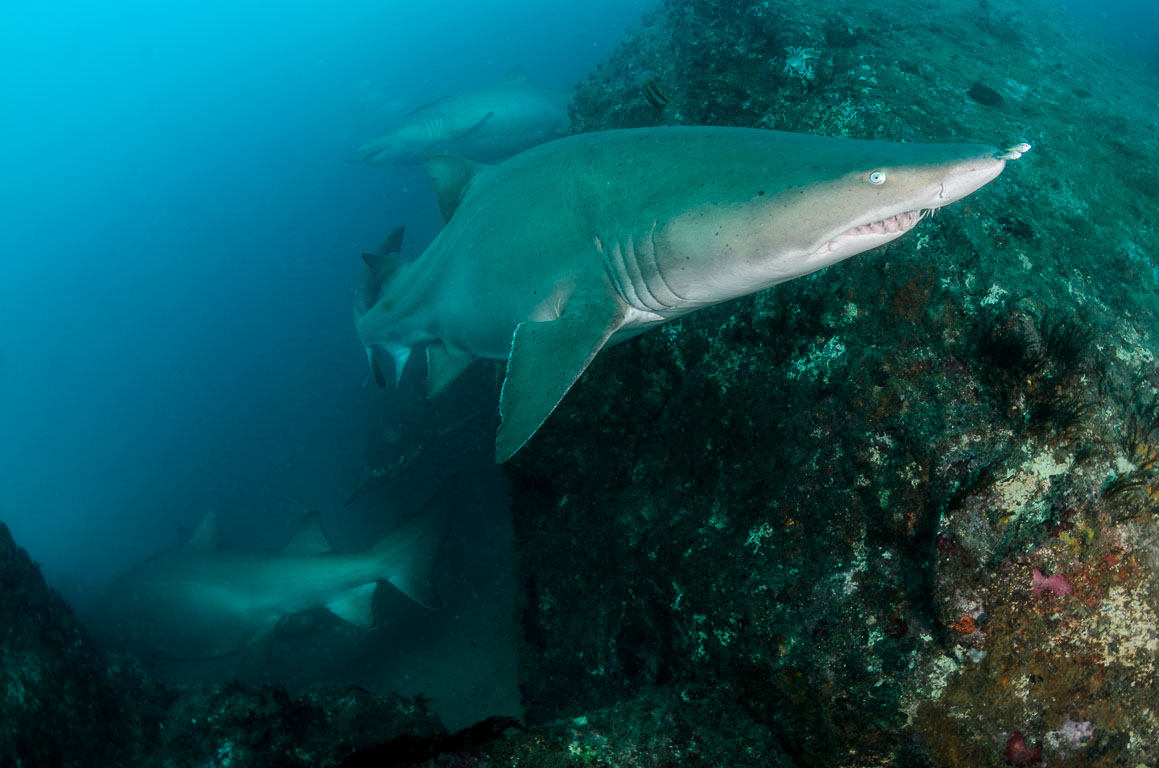
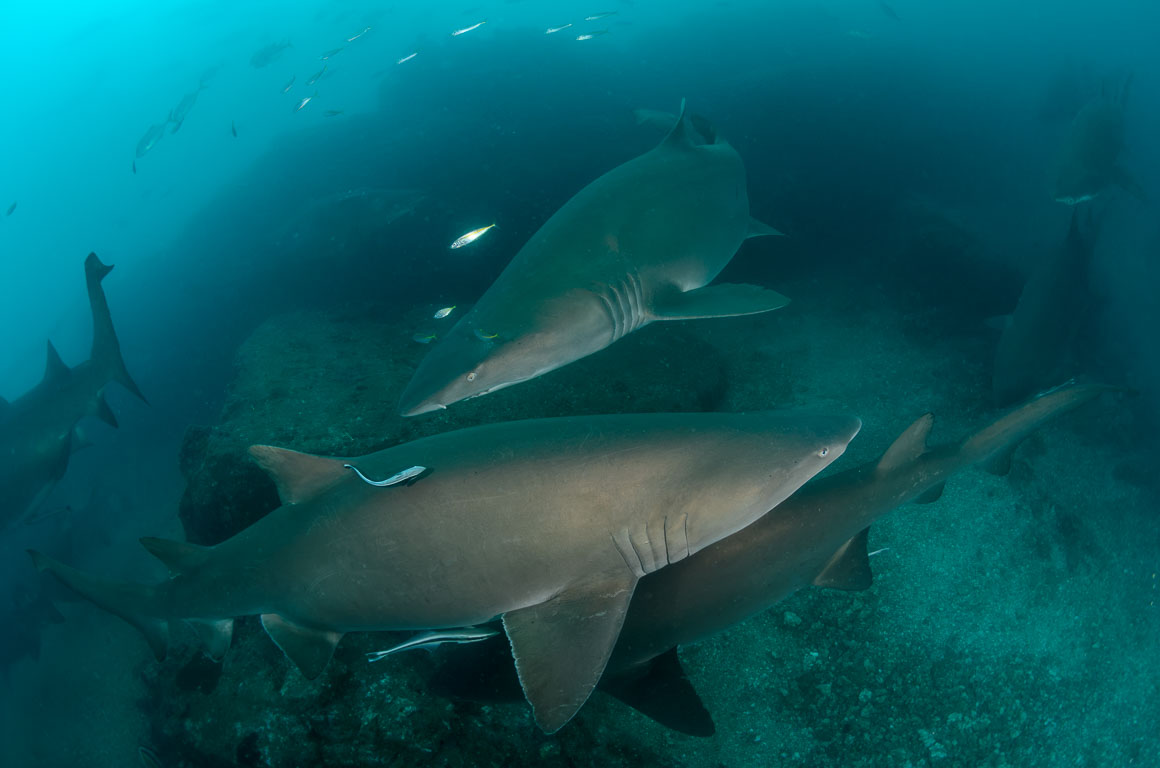
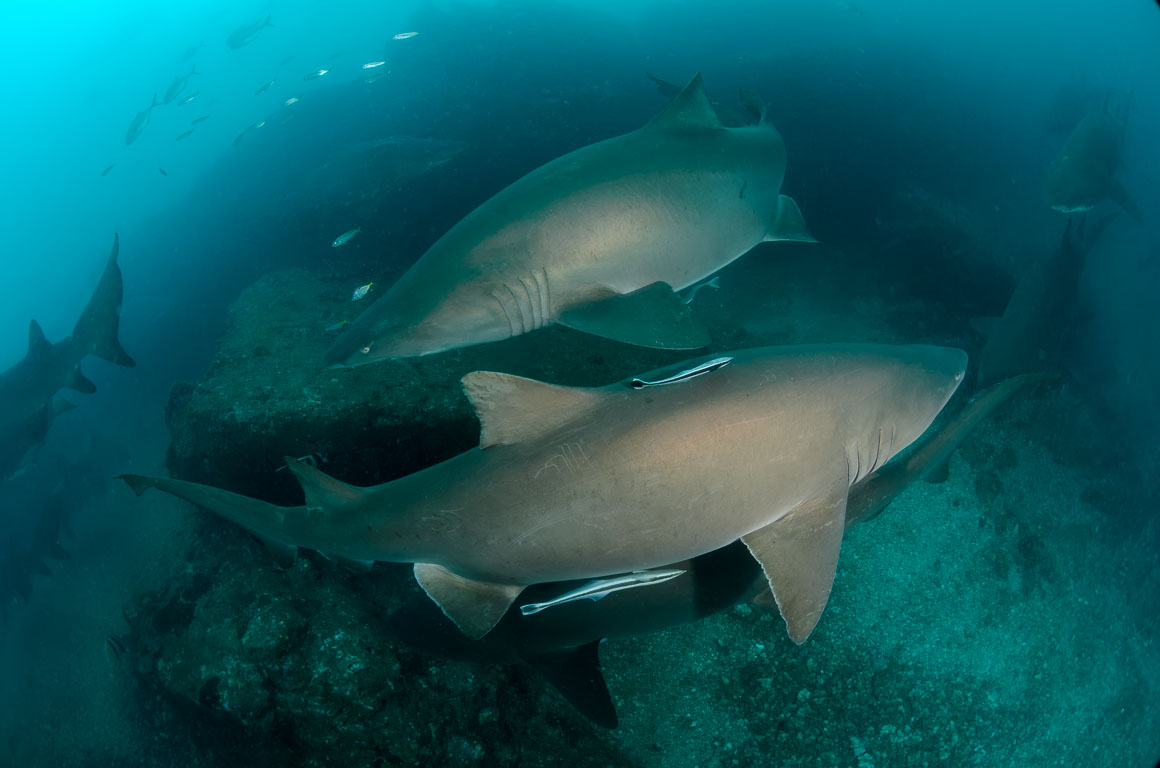
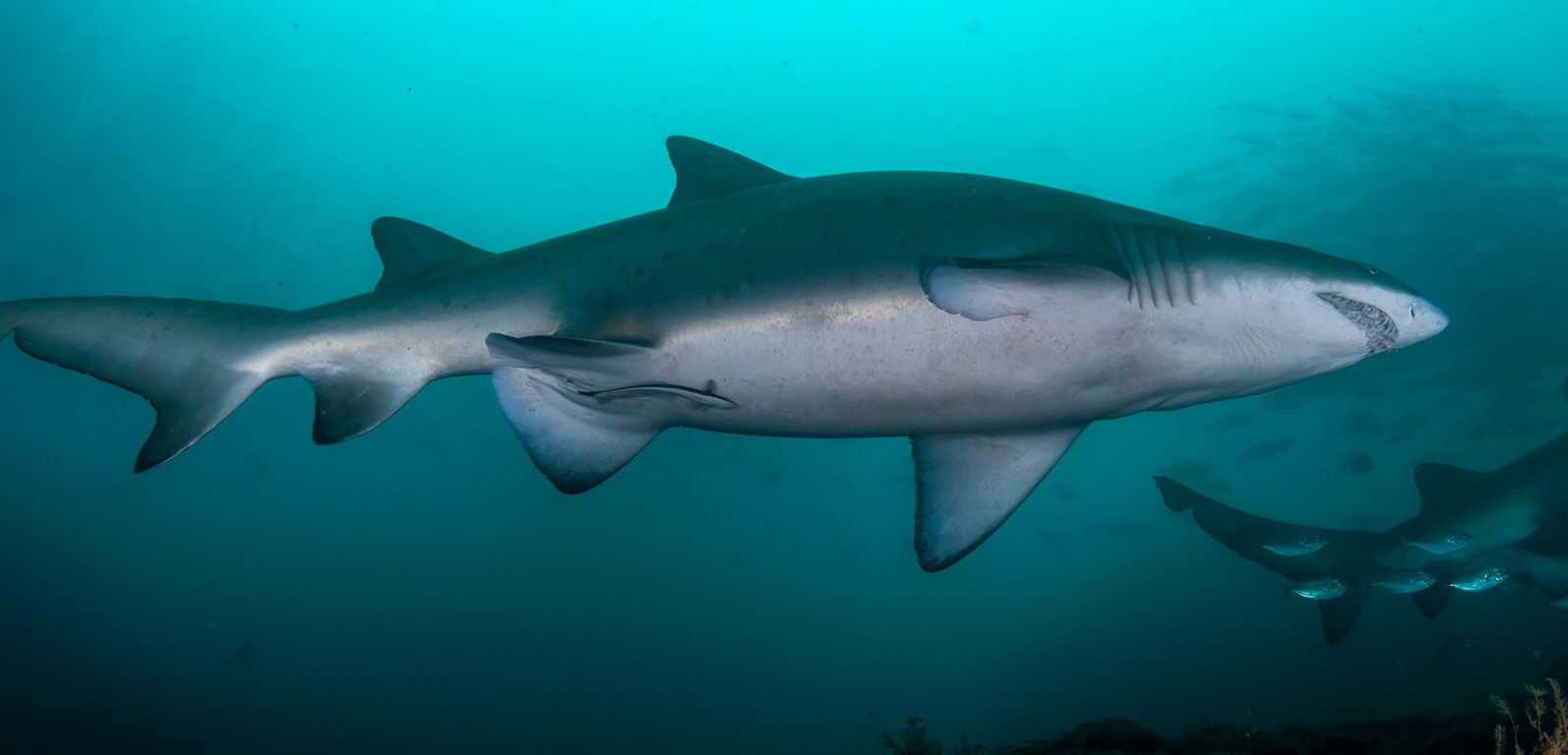
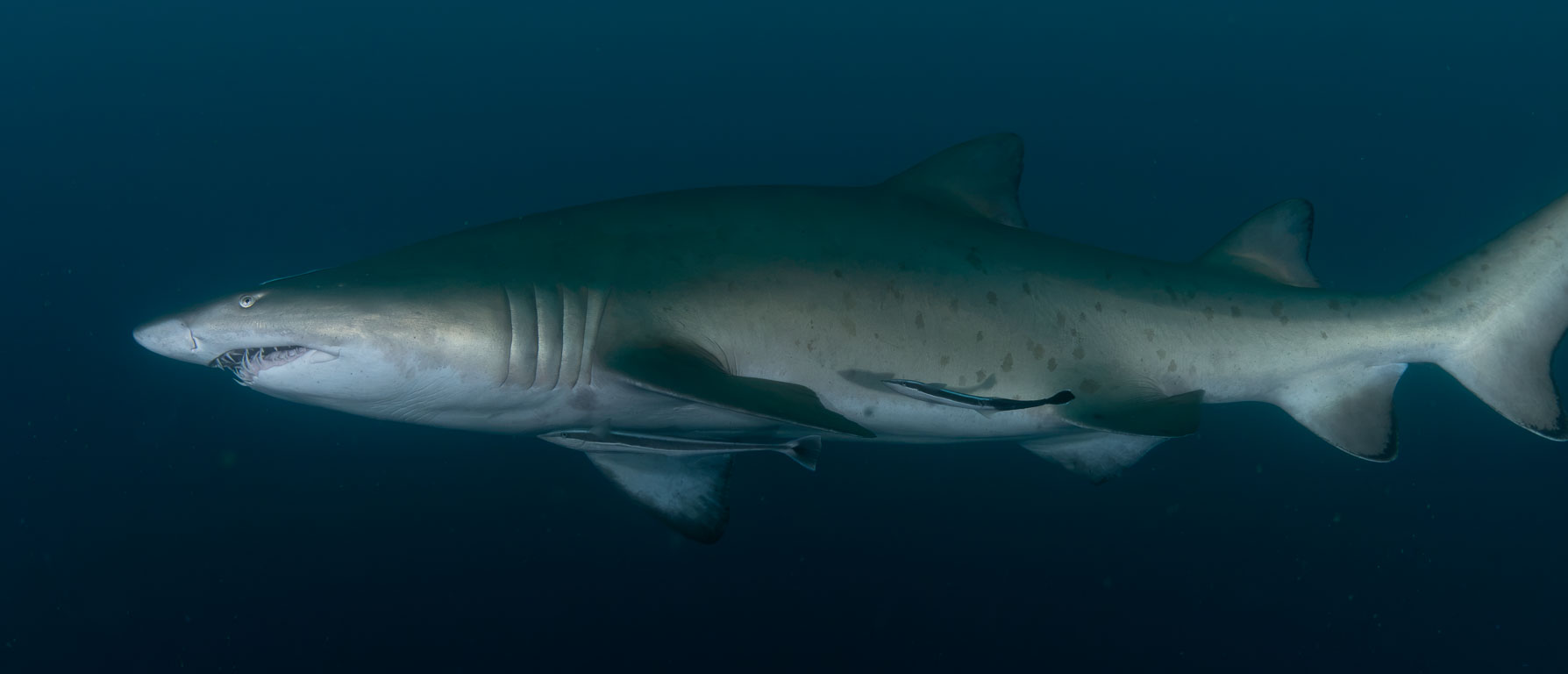
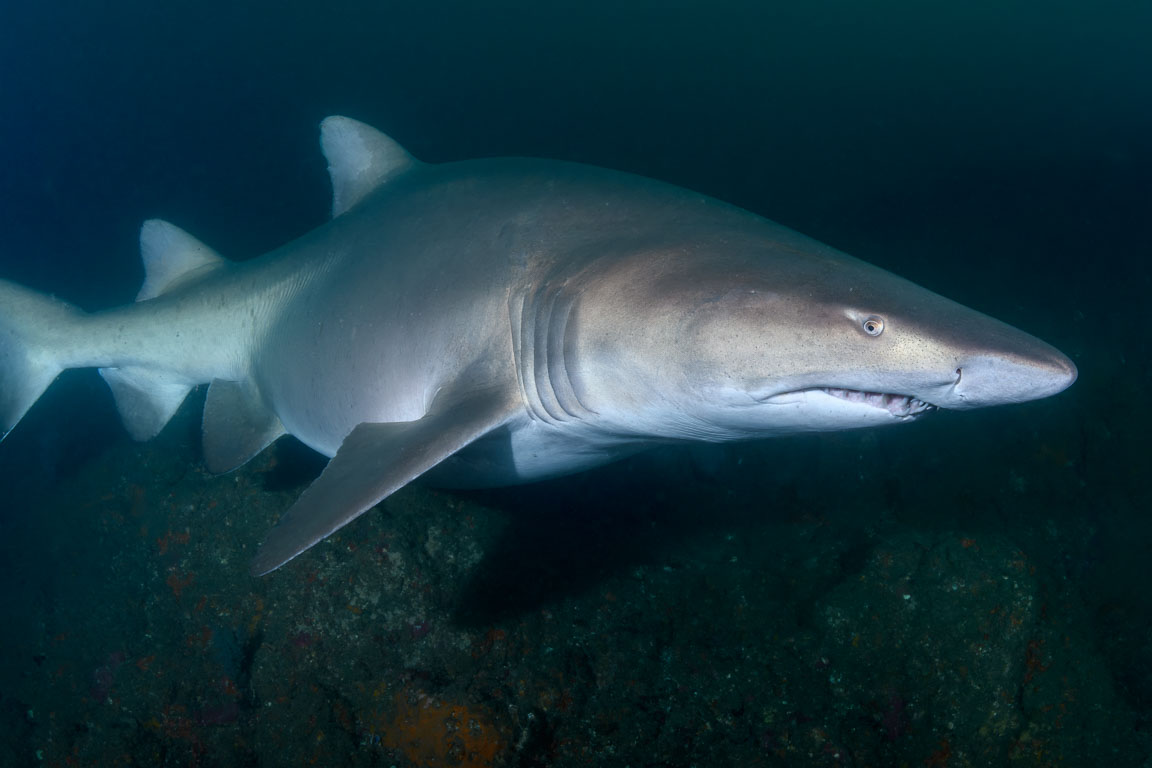
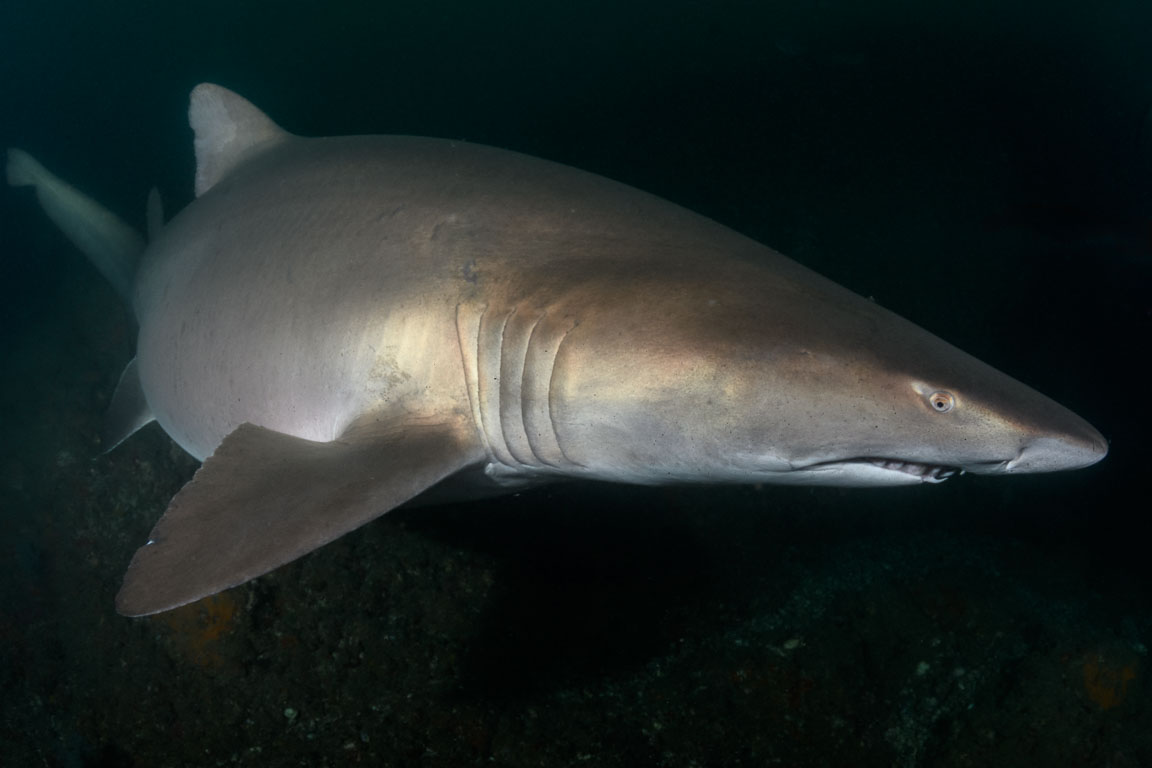
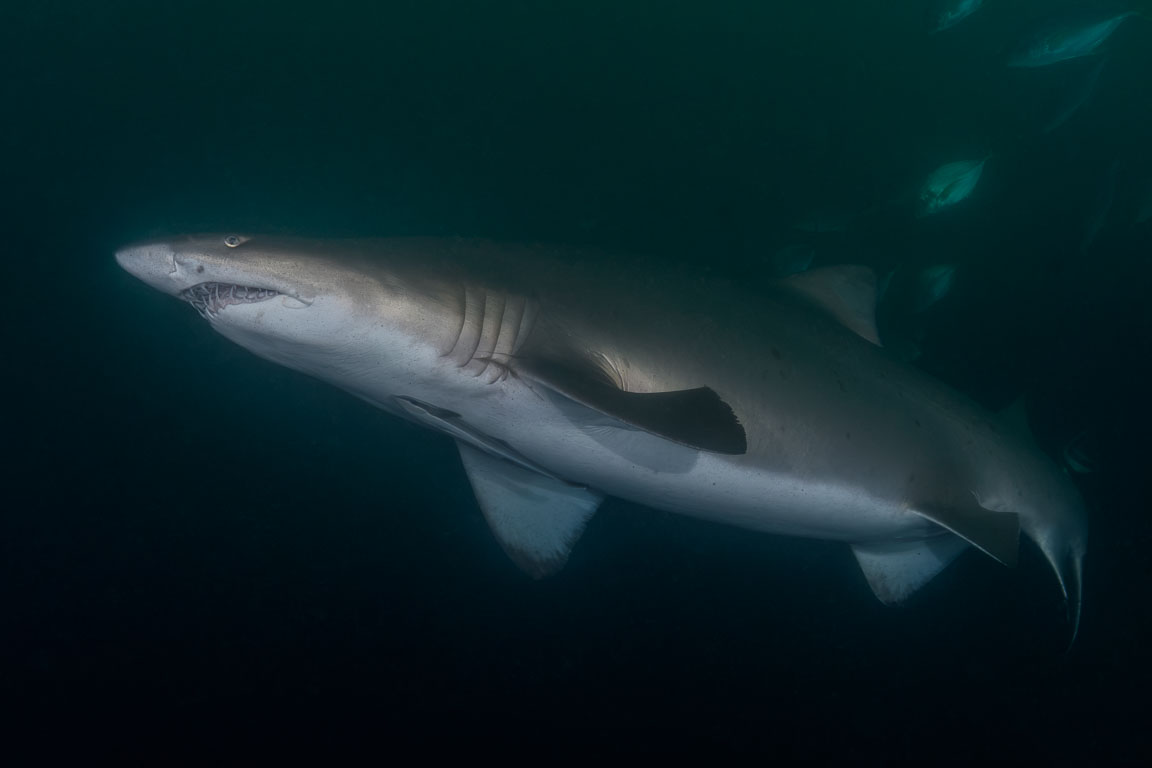
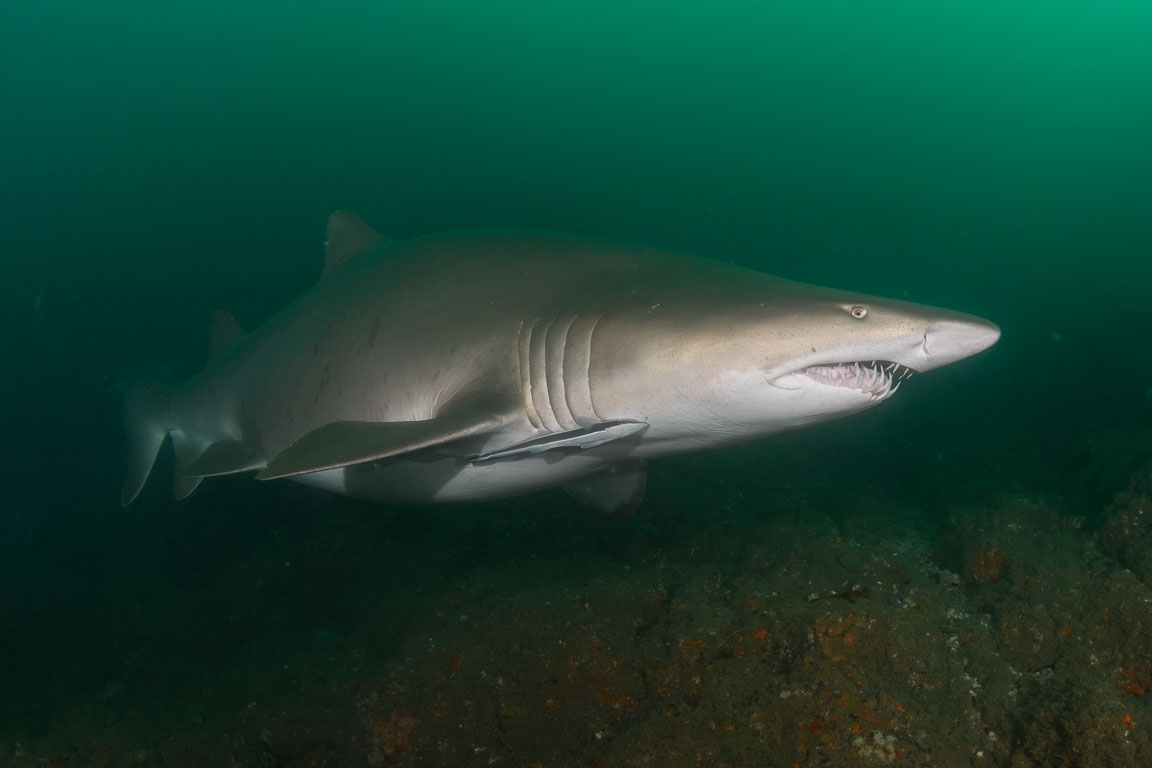
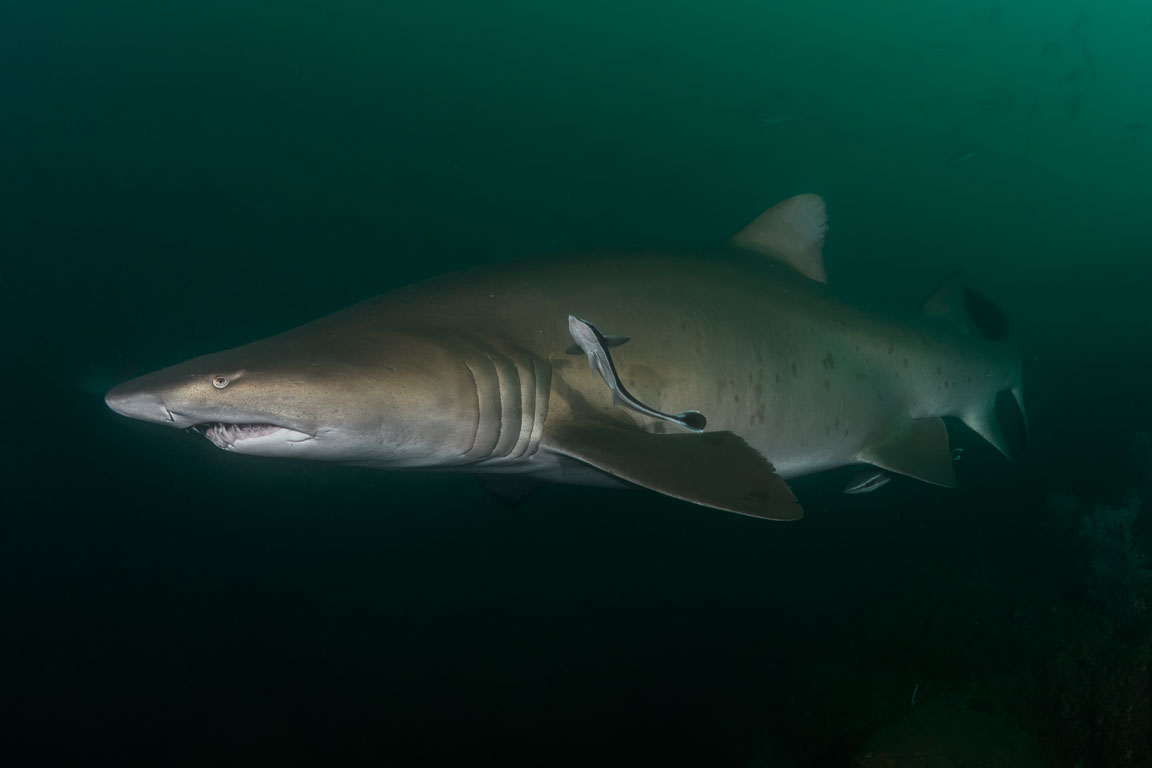
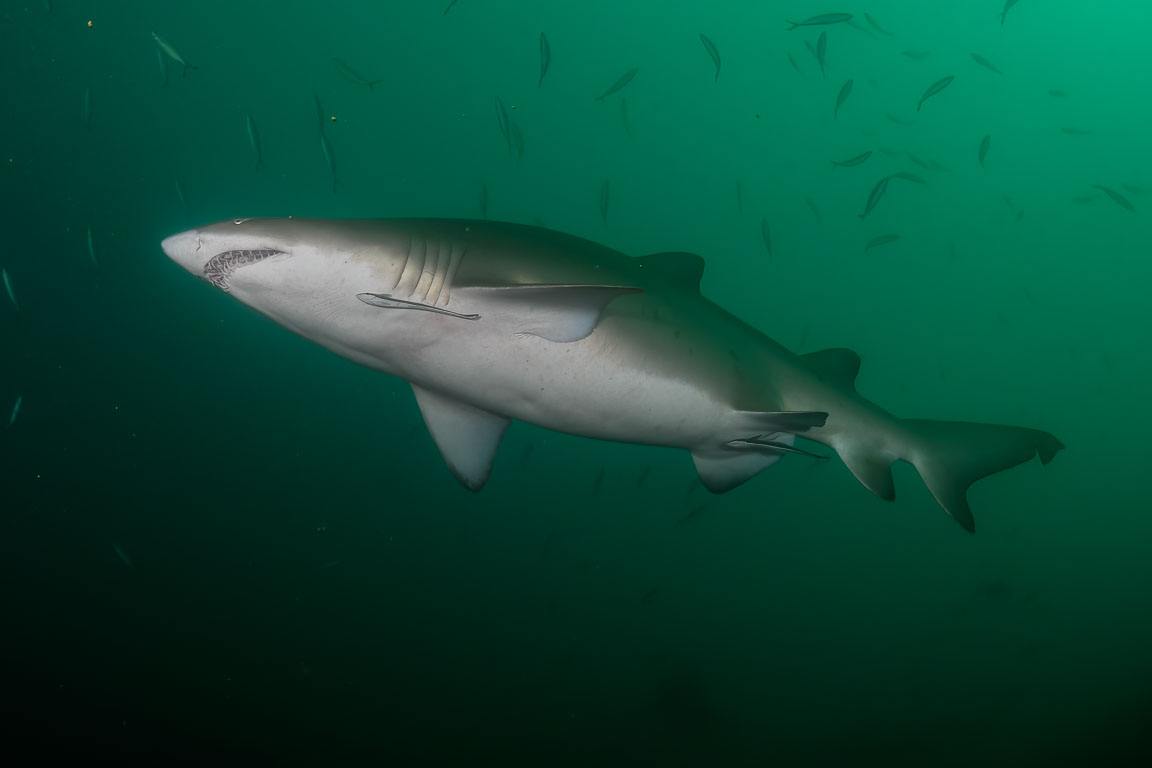
Like an oasis in a desert, the pinnacles provide a hard substrate for corals, sponges, and other marine organisms and attract a remarkable concentration of fish and larger animals. The most spectacular inhabitants are undoubtedly the sand tiger sharks, known as Grey Nurse Sharks in Australia (Carcharias taurus). They are regularly encountered around the pinnacles and can often be observed cruising slowly through the deeper sections of the site. Their presence is one of the main reasons Wolf Rock is such a special dive site.
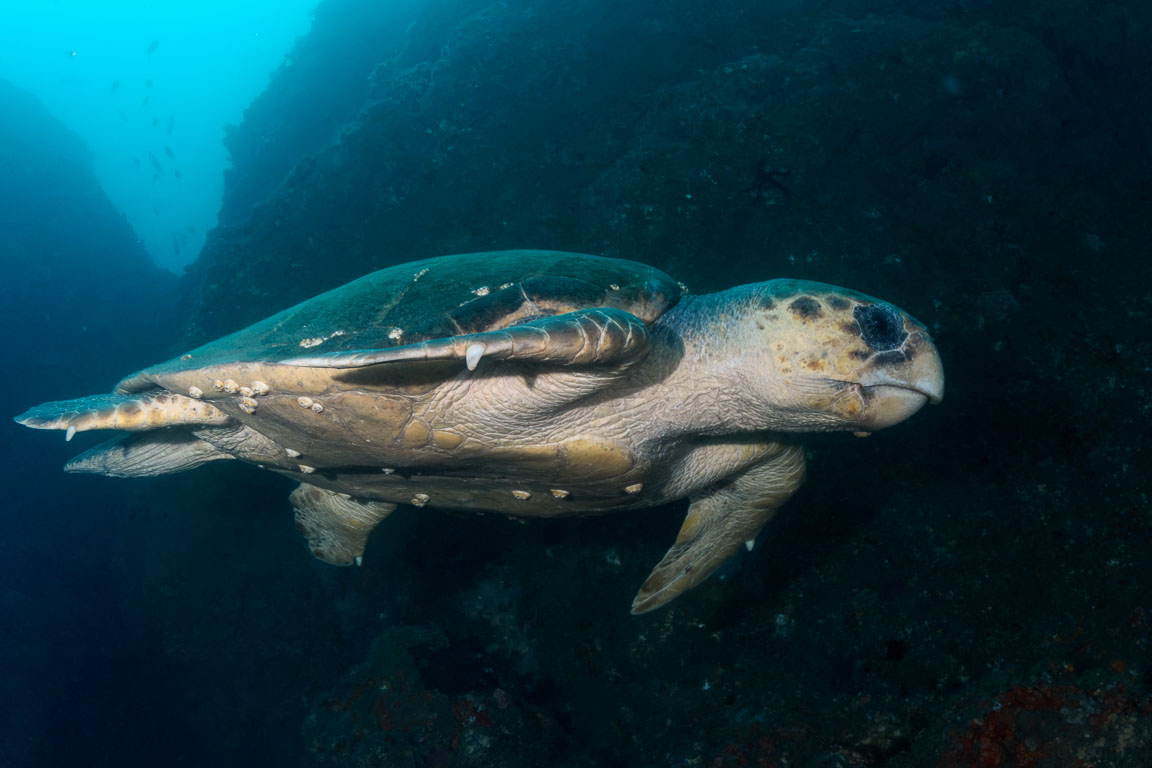
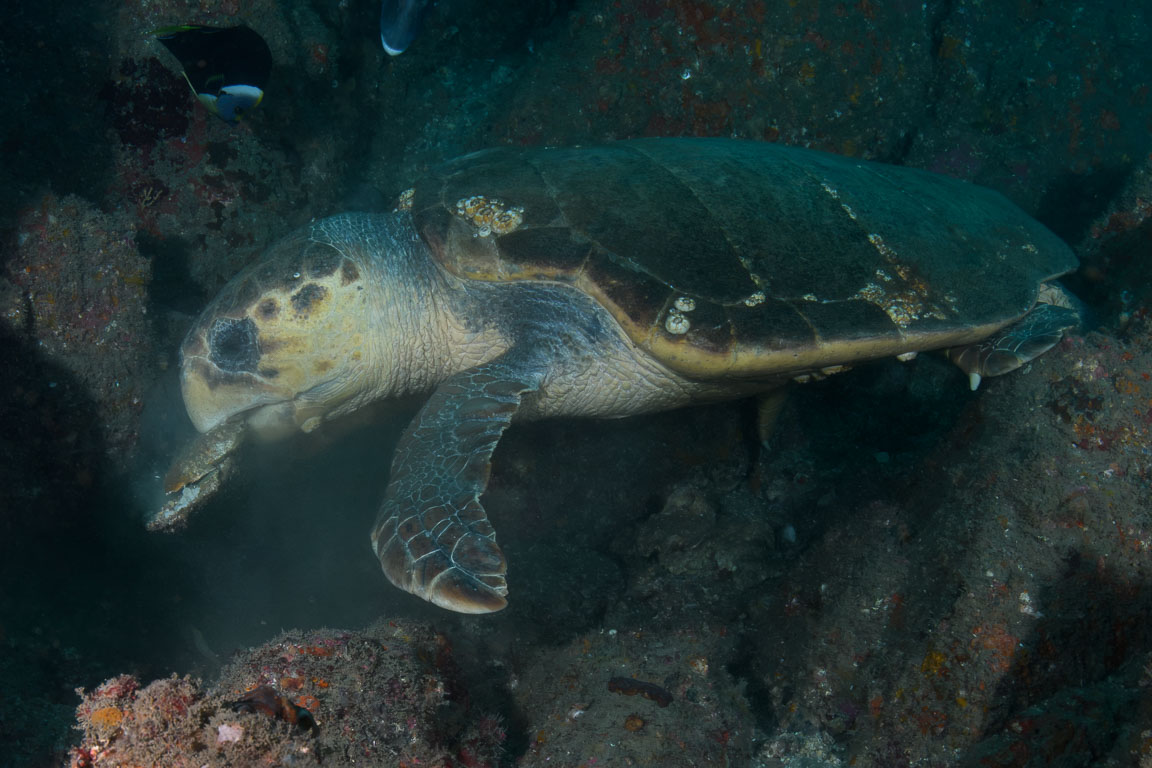
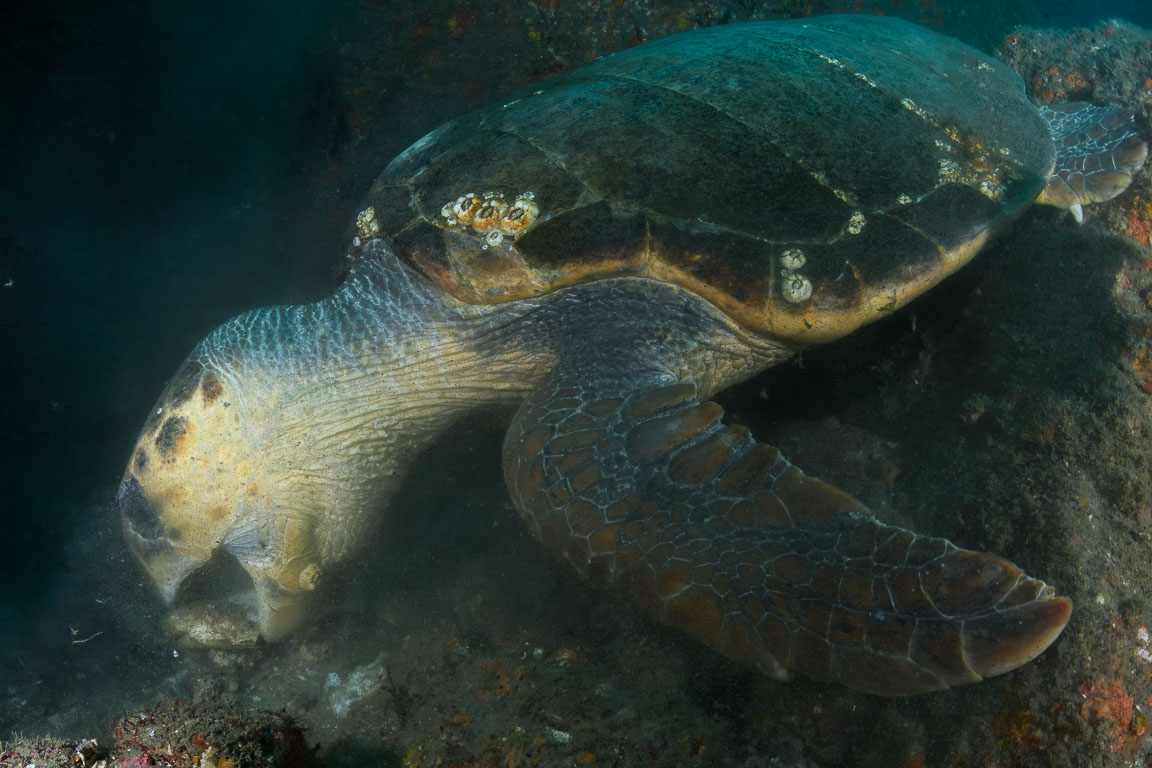
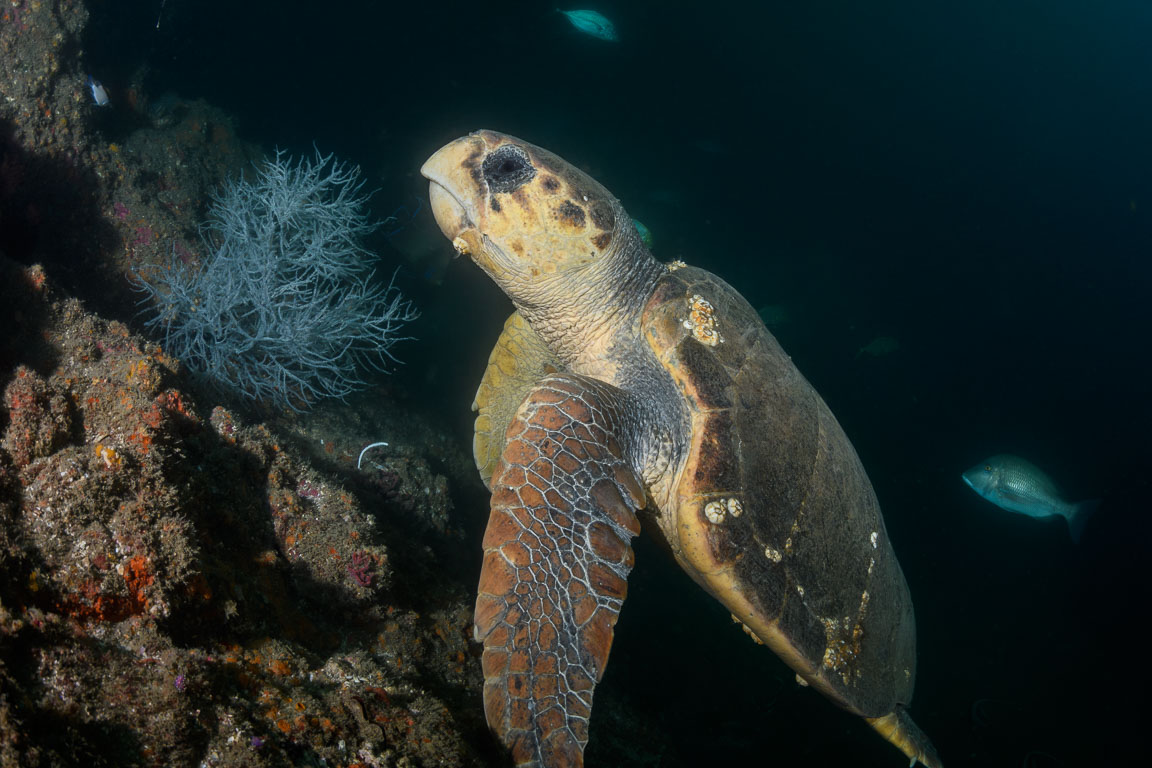
The sharks are not the only attraction. Large groupers, rays, and sea turtles are regularly seen around the rocks, while schools of smaller reef fish add to the density of marine life. The steep rock walls, overhangs, and deeper passages also provide a variety of habitats within a relatively small area.
Wolf Rock is not an easy dive, however. The deeper parts of the site can reach more than 35 metres, and visibility can be limited, particularly when conditions are less favourable. Currents and surge can also make the diving more demanding. Good buoyancy control, appropriate experience, and careful attention to the conditions are important, particularly when diving close to the deeper pinnacles.
The site is operated by Wolf Rock Dive in Rainbow Beach, which offers day trips generally consisting of two dives at Wolf Rock. Because of the extensive sandbanks along the coast, the boat journey takes approximately 40 minutes and can be quite rough. Sea conditions therefore play an important role in determining whether the trip can operate.
For me, the combination of an isolated rocky habitat, abundant marine life, and the regular presence of Grey Nurse Sharks makes Wolf Rock one of the most interesting dive sites along the Queensland coast.